




There are 33 different species of Dolphin around the world, many living in the waters around Australia. The most common species of Dolphin is the Bottlenose Dolphin, which live in varying climates. Dolphins are warm-blooded mammals, which breathe air, and due to their social nature often live in pods of about 15 dolphins.
Dolphins are often regarded as one of Earth's most intelligent animals, though it is hard to say just how intelligent. Except for humans dolphins have few natural enemies. Some species or specific populations have none, making them apex predators.
For most of the smaller species of dolphins, only a few of the larger sharks, such as the bull shark, dusky shark, tiger shark and great white shark are a potential risk, especially for calves.
 Dolphins have extremely sensitive skin, which has a rubbery feel. Their circulatory system is very good for preserving heat, with blood vessels in their dorsal fin, flippers and tail re-warming cool blood to spread around the body.
Dolphins also have fantastic eyesight, enabling them to see both in and out of the water. However, they can only see infront of them and below them, and so have to swim upside down sometimes to catch fish.
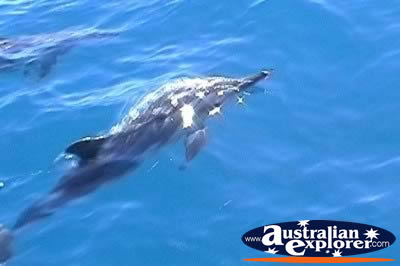 The average size of Bottlenose Dolphins is between 2 - 4 metres long, weighing between 90 - 650 kilograms. However, they vary in looks according to where they live and spend their lives. Dolphins eat plenty of food daily, totaling about 5% of their body weight. They catch fish, octopus and squid with their sharp teeth, although swallow the food whole and digest it in their stomachs.
Dolphins can stay under the water for about 15 minutes, and can swim to depths of over 100 metres due to their collapsible ribs, which vary according to the water pressure. They can also jump about 6 metres out of the water, and love surfing on waves.
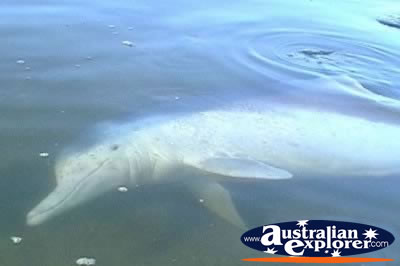 Dolphins have a wide range of ways of communicating, much like humans. Ways in which they communicate with each other include body posture, bubble blowing, chemical releases, language, sound, touch, and splashing on the waters surface.
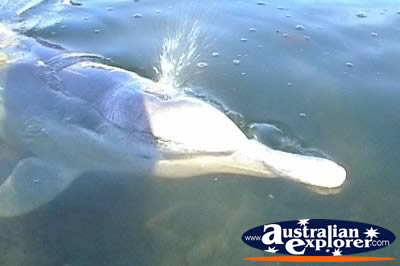 Dolphins can be recognised by their unique 'Signature Whistle', which is an extremely high-pitched sound. This sound comes from their blowhole on the top of their heads. They also send out clicking sounds, which bounce back to their forehead to identify the size and distance of objects around them.
Due to the constant danger of predators Dolphins don't ever sleep, they merely nap for about 30 minutes with half their brain alert.
 Dolphins become sexually active at around the age of 10 and generally live up until around 30 years old. Female Dolphins carry young for 12 months and give birth to live young. During the birth an 'aunty' dolphin will help, although many calves are soon taken by predators. When this happens the mothers mourn for their young, continually pushing them to the surface to breathe.
During the first two years of birth the calves will feed off of milk from the mother. Dolphins give birth every 2 - 4 years and once the calf is about 3 years old, it is ready to go off on its own.
Dolphins are in great threat from a wide variety of objects and actions within the water. Dolphins and other marine life often get caught up in fishing lines, and have difficulty with Stainless Steel hooks caught in their mouths. Rubbish and other waste products can also be swallowed by Dolphins, causing pain. They also often have difficulty getting out of the way of speed boats and jet skis.
Dolphin Language
- Blowhole - Hole on the top of their head, which they use to breathe
- Blubber - Insulating layer if fat under the skin
- Breaching - Leaping out of the water, and crashing down onto it
- Cetacean - Scientific name of Dolphins, Porpoises and Whales
- Delphinidae - Family name for the entire dolphin group of Cataceans
- Dorsal Fin - Fin in the middle of the back
- Echolocation - Sending out sounds to find out what is around them
- Exhale - Breathing out of its blowhole
- Flukes - Tail flukes help the Dolphin move through the water
- Ghost Nets - Loose fishing nets floating around the seas
- Home Range - The home base for a Dolphin
- In-Shore (Tursiops aduncus) - Dolphins that live within about 10km of the coastline
- Inverted Hunting - Swimming upside down to catch a fish on the surface of the water
- Logging - Relaxing on the surface of the water
- Melon - Fatty tissue on the Dolphins forehead that is used for their Echolocation system
- Mysticetes - Whales with plates instead of teeth
- Odontocetes - Dolphins, Purpoises and Whales who have teeth and not plates
- Pectoral Fins - Side fins, used to steer
- Pod - A group of Dolphins. Rake Marks - Teeth marks from other Dolphins
- Resident Dolphins - Dolphins that live in one area
- Rostrum - Part of the mouth above the lower jaw
- Signature Whistle - A unique high pitched whistle sound made by Dolphins
- Spy Hopping - Looking around with their head out of the water
- Stalked Barnacles - Barnacles which attach themselves to mammals
- Tail Slap - Slapping the tail against the surface of the water to show frustration
- Transient Dolphins - Dolphins that constantly move from place to place
| SHARE with |  |
 |


